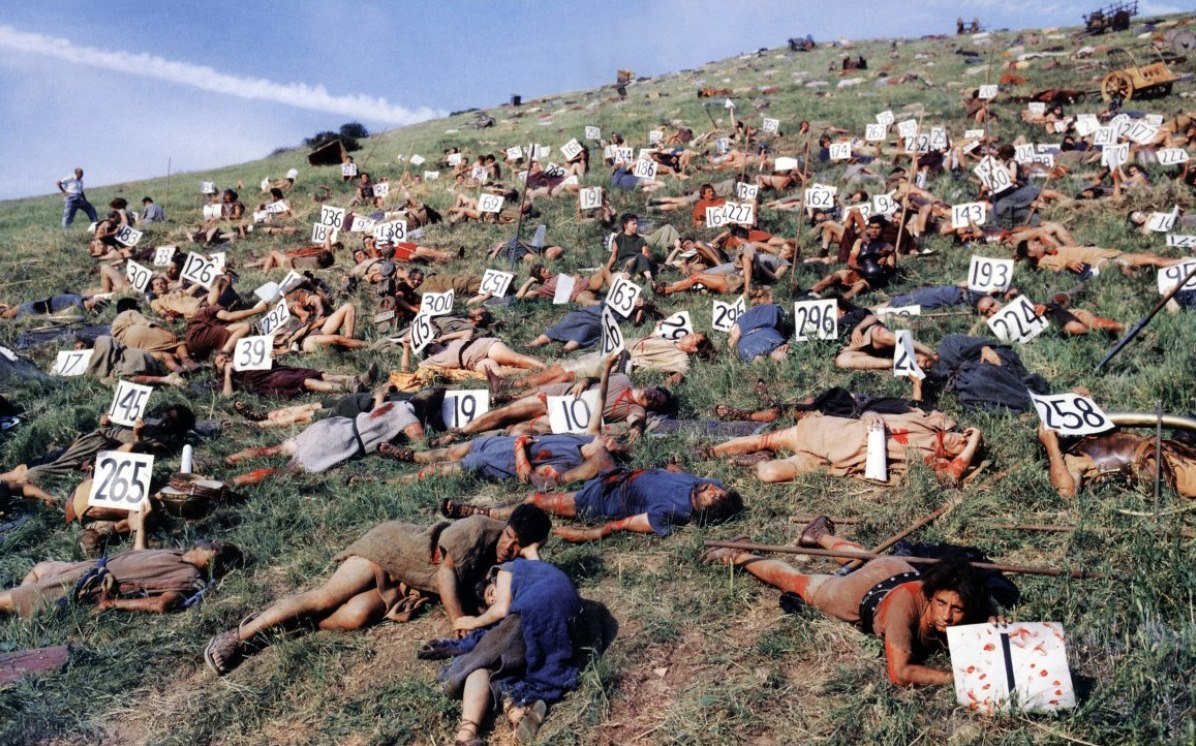
The Background Actor with The Extra Smell

Background actors, also known as extras, are often the most underappreciated and despised positions of employ within screen acting. Mostly because too large a percentage of background actors have that extra smell.

Extra Background Actors

Paul Russell_HeadshotPaul Russell – author ACTING: Make It Your Business, director & casting director

Background actors, also known as extras, are often the most underappreciated and despised positions of employ within screen acting. Mostly because too large a percentage of background actors have that extra smell.

Extras are the actors required to fill-out the background of a screen story. Without extras, the world of film and television would appear as empty as a movie theater playing a marathon of Adam Sandler flicks.

Some actors leverage being an extra–the grunt work of acting–as a chore for financial survival. Temporarily they’ll network on set with entertainment colleagues with the knowledge that the belittlement withstood of being herded like cattle around a set is a temporary gig and not a career. These actors though will encounter on set delusional actors who fervently believe that being an extra will eventually propel them to having their own star on the Hollywood Walk-of-Fame; possibly aside Donald Trump’s unearned star. These are the actors who are known in the industry as “having that extra smell.”

The extra smell actor is the actor who believes their self-declared stunning beauty or unusual look once glimpsed on the screen for less than a nanosecond will have a director or producer rise pointing to the screen and shout, “Get me that actor! That’s the star of my next budget-busting-blockbuster!”

More Characteristics of Actors with the Extra Smell

1. Actors with a shopping list of credits on their resume that are named as the following actual credit from an actor’s resume: “Professional business man on the park bench reading The Wall Street Journal as Jennifer Anniston jogged by.”

2. Actors who when opening their wardrobe closet refer to clothing by project names: “For my date tonight, I think I’ll wear The Lovely Bones.”

3. Actors with an app on their smartphone a search engine for public bathrooms that can be used as a changing room while on location.

4. An actor with more autographs of the principals “worked with” than principal credits on their resume.

5. An actor with a composite card that displays them in various costumes from their roles as an extra, and then they utilize that comp card as a headshot to casting for principal work consideration. Extra smell.

6. Actors who send a picture and resume to a casting office that casts only principals and the actor requests consideration for extra work. Doubly extra smelling.

7. A background actor listing the extra credits on their resume as “featured.” “Bingo!” called for the extra smell in the corner of your screen.

8. The extra actor who complains to the caterer at craft services that over the past several years the caterer’s tri-colored pasta salad has been deteriorating in quality. Table for one extra smell.

9. Actors who faithfully believe that if the director happens to silently notice them then that director will instantly, without hearing the actor speak, catapult that actor to principal status.

10. Actors who gaze dreamily at a nearby honeywagon on set and fantasize it’s an oasis of stardom. There’s a room for the actor with an extra smell.

11. If while dressed uniformly among peer extras, there’s the extra actor who notices that their robe has a silver buckle upon its sash while the extra standing aside them has a sash with a gold buckle. And this slight in lower metallic grade on a costume ignites the jealous actor’s anger. Wardrobe knows who has that extra smell.

12. An extra arriving on set with a backpack bulging with screenplays they wrote as vehicles for themselves to star in and their sole intent for the day is to distribute them to anyone who makes eye contact. Everyone sees that extra smell coming.

13. An extra working on a James Cameron film, and the closest proximity they made to Mr. Cameron is the third AD. But later when speaking to fellow extras the actor claims, “James thinks I would be fantastic for the president alien who stops the oil tanker from plowing into the Statue of Liberty.”

14. Actors who mistake casting directors Mali Finn and Jonathan Strauss for a Vegas act.

15. Actors watching a movie who ignore the principals in order to evaluate the extras in the background.

16. Actors lobbying SAG-AFTRA, The Academy of Motion Pictures & Sciences, and The Academy of Television Arts & Sciences that each implement the award category: Best Extra in a Comedy, Drama or Musical.

17. Actors whom after being cast announce on social media, “I got casted.” There’s an actor whose vocabulary has an extra smell.

Put into proper perspective by the participant background work as an actor does have benefits: A paycheck. A networking opportunity. When work for an actor as an extra is approached by an actor with fantasies that the silent background cross or sitting at a table will lead to eventual fame; that actor has an extra smell that prompts principal professionals to run. Talent representation and casting directors advise actors who want to seriously pursue principal screen work to minimize or delete all their extra credits from the resume when an acting resume is sent to principal casting directors and Legit talent agents.

Now, before some actors misinterpret that prior statement and post on an online message board misinformation stating, “Paul Russell said….” let me re-state more plainly. Take the paychecks. Remove or minimize the extra credits on your resume if you want to be considered for principal work on screen. Have a separate resume listing acting history as an extra for when submitting for work to casting directors who cast background actors.

What if extra credits are all an actor has listed under the Film/TV header of their Legit resume and that actor wishes to grow beyond being an extra? Minimize. Actors with that extra smell will often include on their Legit resume every silent walk-on. Which in turn leads the purveyor (casting directors and talent agents) of the actor’s work history to ponder, “Can’t act. Directors don’t trust him or her with an Under Five or better.”

(continue reading)
HAMILTON’s casting director
praises Paul Russell’s book on acting
as “a must read for all actors… the actor’s roadmap!”

AMIYB_Amazon

There’s nothing disgraceful about being an extra (other than the sometimes disgraceful treatment of extras on set). An actor as an extra produces a paycheck. The under-appreciated work provides an actor with fresh contacts. The temporary employ won’t be an end-solution for becoming a star. Which by-the-by, fame should never be the reason for being an actor, and if that is an actor’s sole intent for being in the arts–that actor has that extra smell.

My best,
Paul
www.PaulRussell.net

Share this:

Casting Directors, Talent Agents, Directors & Actors

Love Paul Russell’s Best-Selling Book for Actors
ACTING: Make It Your Business!

“Humorous and witty…
Actors everywhere who are trying to succeed in the business, young or old, on stage or on camera, anywhere in the world, take note:

This is your roadmap!”
BERNARD TELSEY, casting director – CSA
(The InternHamiltonNBC’s The Wiz – LIVE!, Wicked)


“All the right questions asked and answered…
and with a generous portion of good humor.”
SUZANNE RYAN, casting director, CSA
(Law & OrderUnforgettable)


“I love this book!
Paul’s book tells you what you don’t want to hear but really need to know
EVERY actor should read this book!”
DIANE RILEY, Senior Legit Talent Agent
Harden-Curtis & Associates


“Paul’s book made me proud to be a part of this community we call ‘show!'”
KAREN ZIEMBA, TONY & Drama Desk Award Winning Actress


“Paul Russell’s words are not only blunt & accurate they zero in on all the questions every actor wants to know but is afraid to ask!”
KEN MELAMED, Talent Agency Partner
Bret Adams, Ltd.


“I had my Business of Acting, BFA Seniors, class do book reports on a variety of “business of acting” books and ACTING: Make It Your Business came out a clear winner—considered to be essential for their bookshelves!
Dr. NINA LeNOIR,
Dept. Chair – Dept. of Thtr.
Chapman University


Get smarter on the business of acting from legendary Hollywood & Broadway actors and talent agents in a casting director Paul Russell’s Best-Selling Book ACTING:AMIYB_Amazon Make It Your Business!

Paul Russell’s career as a casting director, director, acting teacher and former actor has spanned over thirty years. He has worked on projects for major film studios, television networks, and Broadway. Paul has taught the business of acting and audition technique at NYU and has spoken at universities including Yale, Temple and the University of the Arts. He is the author of ACTING: Make It Your Business – How to Avoid Mistakes and Achieve Success as a Working Actor. For more information, please visit www.PaulRussell.net.
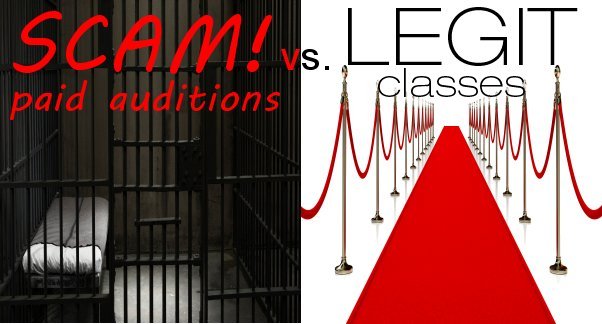
“Scam” Paid Auditions vs. Legitimate Acting Classes

There is truth versus perception. SAG-AFTRA, the largest union representing screen actors, may have unintentionally caused confusion in truth versus perception for what is a legitimate class for actors, as opposed to what is a questionable workshop. Bewildered actors, both union and non-union, potentially suffer from the lack of career expansion misunderstanding what is a legitimate educational acting resource versus what is in SAG-AFTRA’s assessment, “a scam.”

ScamVsLegit

Paul Russell_Headshot

Paul Russell
PaulRussell.net


There is truth versus perception. SAG-AFTRA, the largest union representing screen actors, may have unintentionally caused confusion in truth versus perception for what is a legitimate class for actors, as opposed to what is a questionable workshop. Bewildered actors, both union and non-union, potentially suffer from the lack of career expansion misunderstanding what is a legitimate educational acting resource versus what is in SAG-AFTRA’s assessment, “a scam.”

SAG-AFTRA recently warned its membership, via online media, that actors within its guild not participate in workshops attended by casting directors, agents, and/or managers in which actors pay to participate:

“It shall be deemed conduct unbecoming a member for any member of the union, directly or indirectly, to give or offer to give any money, gift, gratuity or other thing of value to an employer, or prospective employer, to any officer, agent, representative or employee of such employer or prospective employer, or to any employment or casting agency representing an employer, or prospective employer, or to any of their officers, agents, representatives or employees as an inducement to secure employment.”

Deeper in SAG-AFTRA’s declaration is a passing disclaimer potentially overlooked or misinterpreted by actors:

“This includes workshop-style situations where a casting director watches your scene or monologue, offers no meaningful critique or feedback, and is presented as someone looking for actors for ‘current and upcoming projects.’ This becomes a paid audition, which is against SAG-AFTRA rules.”

The phrase, “offers no meaningful critique or feedback” is the foundation to understanding what SAG-AFTRA considers a ‘class’ versus a ‘paid audition.’ Thoughtful advisement for bettering the actor’s craft, plus actionable constructive criticism is apparently in SAG-AFTRA’s view the keystone to a casting director, talent agent or manager participating in a educational resource for actors. But actors quickly scanning SAG-AFTRA’s membership directive, or non-union actors encountering similar discussion through the nefarious actor grapevine, potentially lump all educational actor workshops and classes together with the shove-actors-through-the-door, paid audition scenarios.

The Confusion

When actors mistakenly interpret from a union, or a colleague, that the vernacular of ‘workshops,’ ‘seminars,’ or ‘classes’ are pay-to-play scams then those actors assume that all actor-focused classes of which industry attend are illegitimate. A self-destructive disservice to the actor wishing to expand their career skills, and resumé.

A growing percentage of acting studio educational classes have their roots in the collegiate world. Annually, universities with esteemed acting programs bring to their campuses entertainment executives who share valuable experience with student actors via master classes. These casting directors, directors, and talent representatives leading collegiate master classes then offer the same insights expressed at universities in private acting studios of New York City, Los Angeles, and/or Chicago.

Differences Between Paid Classes With Industry vs. Paid Auditions

Classes / Workshops:

A class for actors is one that is either held over an extended period of time (several weeks or several months) or in an evening. Beneficial acting-career skills are taught to the actor, and during that learning process constructive feedback is given to the actor by the instructor and/or invited entertainment executive(s). Entertainment executives may include: casting directors, talent agents and managers, directors, or actors with well-established careers.

Paid Auditions:

Actors pay a fee to be seen by an entertainment executive or panel via a monologue, or a hurriedly put-together scene. No feedback to the actors is offered. The session for each actor lasts several minutes. The session for the executive(s) is a duration of several hours as the actors are presented like cattle at an auction. These studios often herald in their advertising, or via email blasts, that the studio is responsible for every career advancement made by each actor who shuffled through their system no matter how long ago the actor was herded through the studio’s chute. Often the studio has no association with, or influence on, the actor’s toil in procuring the booking(s). Some of these studios now advertise “exclusive rights” to a casting director or talent agent as attending only that studio’s sessions. “Tisn’t morals, ’tis money that saves…”

Are Paid Auditions Valuable?

A good number of actors have formed professional relationships with agents and/or casting directors from these scenarios. More actors though have found the one-night stand paid auditions to be a frustration. The feeling disenfranchised actors are the most vocal in opposition to what is perceived as a paid audition.

Why Paid Auditions Are Popular

The digital revolution has changed how casting and representation meet talent. Too many actors have mistakenly given-up on the snail mail method of marketing themselves. While the majority of entertainment industry players delete, unopened, unsolicited email from actors. The paid audition, for better or worse, has replaced how first introductions are made.

Actors drive the market for the one-night stands. Actors also drive the market for the legitimate classes, and workshops. Of each, the actor will pay their monies for the value of who is participating. Classes without prominent industry participation don’t sell well; often forcing respected teachers to cancel classes.

Classes for Actors vs. Paid Auditions

Benefits of the paid audition is a questionable gamble that places opportunity in the hands of the attending entertainment executive(s). Classes attended or led by entertainment executives can offer growth from which the actor creates opportunities.

What is truth of legitimate versus the perception of a scam? The answer is within what the seller honestly offers, and the results an actor realistically anticipates.

My best,
Paul

Paul Russell’s 5-Star, Best Selling Book on Acting including Hollywood & Broadway Actors & Agents!

Share this:

Paul Russell’s career as a casting director, director, acting teacher and former actor has spanned thirty years. He has worked on projects for major film studios, television networks, and Broadway. Paul has taught the business of acting and audition technique at NYU and has spoken at universities including Yale, Temple and the University of the Arts. He is the author of ACTING: Make It Your Business – How to Avoid Mistakes and Achieve Success as a Working Actor. For more information, please visit www.PaulRussell.net.

Casting Directors, Talent Agents, Directors & Actors
Love Paul Russell’s Best-Selling Book for Actors
ACTING: Make It Your Business!

Actors everywhere who are trying to succeed in the business, young or old, on stage or on camera, anywhere in the world, take note:

This is your roadmap!”
BERNARD TELSEY, casting director, CSA
(Hamilton, The Intern, NBC’s The Wiz – LIVE!, Into The Woods – The Movie, Wicked)
All the right questions asked and answered…
and with a generous portion of good humor.”
SUZANNE RYAN, casting director, CSA
(Law & OrderUnforgettable)
“I love this book!
Paul’s book tells you what you don’t want to hear but really need to know
EVERY actor should read this book!”
DIANE RILEY, Senior Legit Talent Agent
Harden-Curtis & Associates
“Paul’s book made me proud to be a part of this community we call ‘show!'”
KAREN ZIEMBA, TONY & Drama Desk Award Winning Actress
“Paul Russell’s words are not only blunt & accurate they zero in on all the questions every actor wants to know but is afraid to ask!”
KEN MELAMED, Talent Agency Partner
Bret Adams, Ltd.
“I had my Business of Acting, BFA Seniors, class do book reports on a variety of “business of acting” books and ACTING: Make It Your Business came out a clear winner—considered to be essential for their bookshelves!
Dr. NINA LeNOIR,
Dept. Chair – Dept. of Thtr.
Chapman University

Get smarter on the business of acting from legendary Hollywood & Broadway actors and talent agents in a casting director Paul Russell’s Best-Selling Book ACTING:AMIYB_Amazon Make It Your Bu